The Science & Art of Audio Mastering
Turn a good mix into a commercial-ready release.
Audio mastering is the final and arguably most critical step in the music production process. It is the bridge between your mix and the listener's ears. A proper master ensures your track translates perfectly across all playback systems—from massive club PAs to tiny smartphone speakers—while meeting the strict loudness standards of modern streaming platforms.
Get professional, streaming-ready masters in seconds.
What is Audio Mastering?
Mastering is the process of taking an audio mixdown and preparing it for distribution. While mixing is about balancing individual instruments (kick drum vs. bass vs. vocal), mastering focuses on the song as a single, cohesive unit.
Mixing vs. Mastering
Think of mixing as building a car—assembling the engine, tires and chassis so everything works together. Mastering is the final polish and quality control test before the car leaves the factory. The mixing engineer controls individual tracks; the mastering engineer processes the final stereo bounce.
Why It Matters
Without mastering, a track often sounds quiet, dull or uneven compared to commercial releases. Mastering adds the final EQ adjustments to balance the frequency spectrum, compression to glue the mix together and limiting to achieve competitive loudness without clipping.
- Optimizes playback across all devices (phones, cars, clubs)
- Ensures consistent volume between tracks on an album
- Removes unwanted subsonic rumble and harsh resonances
- Applies final dither and sample rate conversion for distribution
The Mastering Chain Explained
A typical mastering signal chain consists of a specific sequence of processors, each designed to subtly shape and control the audio.
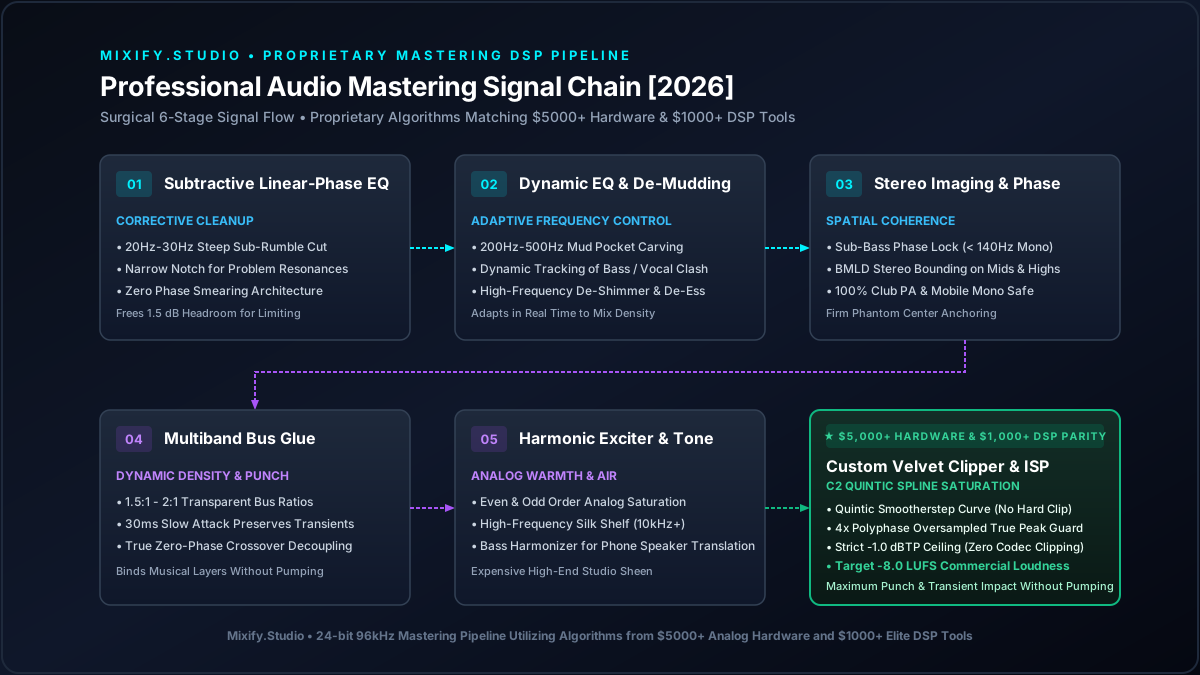
Complete step-by-step DSP signal chain from raw stereo mixdown to high-resolution release master.
1. Corrective EQ
The first step is often a precise surgical equalizer used to cut problematic frequencies, such as low-end rumble (below 30Hz) or harsh whistling frequencies in the high-mids. This cleans up the audio before compression.
2. Mastering Compression
Broad, gentle compression (often with a low ratio like 1.5:1 or 2:1) is applied to 'glue' the mix together, making the instruments feel cohesive rather than separate. Multiband compression may also be used to control specific frequency ranges dynamically.
3. Tonal/Harmonic Excitement
Analog-style EQ or harmonic saturation can be added to give the track warmth, presence or 'air' in the high frequencies (10kHz+). This makes the track sound expensive and polished.
4. Stereo Imaging
Mid/Side processing allows the engineer to adjust the width of the track. The low end is usually kept mono for punch and phase compatibility, while the high frequencies can be widened for a larger-than-life soundstage.
5. Peak Limiting
The final processor in the chain. A brickwall limiter pushes the overall volume of the track up to commercial loudness levels while preventing the audio signal from exceeding 0 dBFS (which would cause digital clipping).
Frequently Asked Questions
Give Your Mix the Final Polish
Upload your track today and hear the difference professional mastering makes.
No credit card required · 5x 60s Free Previews / Month · Lossless WAV download