The Ultimate LUFS Guide
Everything you need to know about Loudness Units relative to Full Scale, loudness normalization and target levels for streaming platforms.
If you're releasing music today, you must understand loudness metering. Loudness Units relative to Full Scale (LUFS) represent the global standard for measuring perceived volume. While streaming platforms like Spotify normalize playback to around -14 dBFS integrated by default, normalization can be disabled by listeners in their settings. Understanding how to balance dynamic range with competitive commercial loudness around -8 LUFS is essential for modern music releases.
Mixify automatically targets optimal streaming LUFS for you.
Streaming Platform Loudness Targets (2026)
Every major streaming platform uses a target for default loudness normalization. When normalization is active and a track exceeds this target, the platform turns it down. However, because listeners can disable normalization, professional commercial tracks often master between -10 and -8 LUFS to stay competitive everywhere.
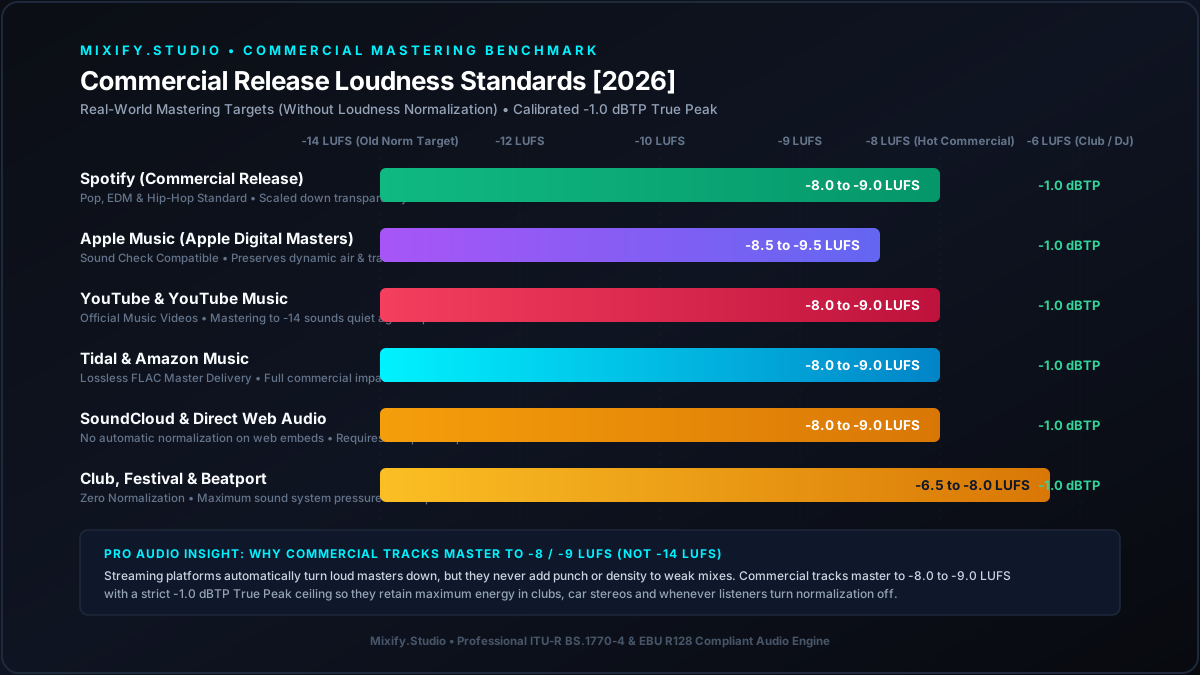
Visual comparison of target loudness levels across Spotify, Apple Music, YouTube, Tidal and club playback.
| Platform | Target Loudness (Integrated) | Target True Peak |
|---|---|---|
| Spotify | -14 (Default) or -8 (Pro Average) | -1 dBTP |
| Apple Music | -16 | -1 dBTP |
| YouTube | -14 | -1 dBTP |
| Tidal | -14 | -1 dBTP |
| Amazon Music | -14 | -1 dBTP |
| SoundCloud | Not Normalized (Aim for -11 to -14) | -1 dBTP |
| Club / Live DJ | -6 to -8 | -0.3 dBTP |
Integrated vs. Short-Term vs. Momentary LUFS
Loudness units are not a single static number. They are measured over different time scales. Understanding the difference is essential for a dynamic master.
Integrated LUFS
This is the average loudness of the **entire track** from start to finish. This is the metric that streaming platforms (like Spotify) use to determine how much to turn your track up or down.
Short-Term LUFS
This measures the loudness over a moving 3-second window. It is highly useful for checking the loudness of your chorus versus your verses. A great chorus might hit -10 LUFS Short-Term, even if the Integrated LUFS for the whole song is -14.
Momentary LUFS
This measures loudness over a very fast 400-millisecond window. It reacts quickly to sudden peaks and drum hits.
What is True Peak (dBTP)?
While loudness units reflect perceived volume, True Peak measures the absolute maximum electrical level of the audio signal, predicting what will happen when the digital audio is converted back to analog.
- **Digital Maximum:** Digital audio cannot exceed 0 dBFS. Anything above 0 clips and distorts.
- **Intersample Peaks:** When streaming platforms convert your WAV file to a compressed format (like Ogg Vorbis for Spotify or AAC for Apple), the process can create 'intersample peaks' that jump higher than your original digital peaks.
- **The Rule:** Always set your mastering limiter ceiling to **-1.0 dBTP** (Decibels True Peak). This gives the encoders 1 dB of headroom to do their compression without causing clipping distortion.
Frequently Asked Questions
Stop worrying about LUFS and limiters.
Let Mixify's AI engine hit the perfect streaming targets for your track automatically.
No credit card required · 5x 60s Free Previews / Month · Lossless WAV download